
National HIV Testing Week 2026
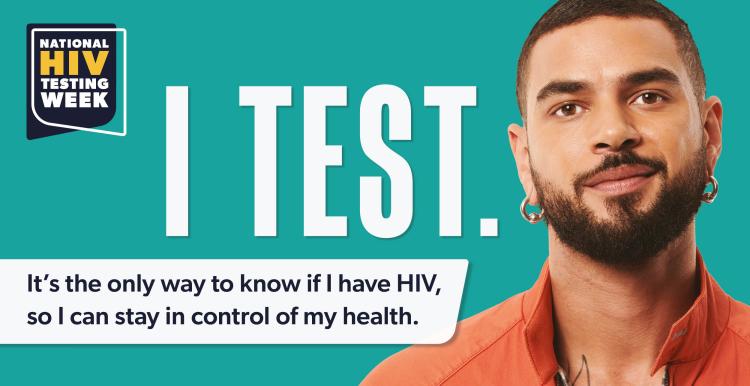
HIV testing lets me live my life, whatever the result.
- People can live with HIV for a long time without any symptoms and testing is the only way to know your HIV status.
- Testing for HIV is quick, easy, confidential and free for everyone in the UK.
- If you have HIV, finding out means you can start treatment, stay healthy and avoid passing the virus onto anyone else.
- There are many ways to test: via a sexual health clinic; your GP; through HIV and sexual health charities; or by ordering a test online.
- Anyone diagnosed with HIV in the UK can access free treatment and support.
What is National HIV Testing Week?
National HIV Testing Week is an annual campaign to promote and encourage regular testing across England. It is particularly targeted at groups most affected by HIV, including gay, bisexual and other men who have sex with men and heterosexuals of Black African ethnicity.
National HIV Testing Week is funded by the Department of Health and Social Care and delivered by Terrence Higgins Trust, as part of HIV Prevention England.
Why is it so important?
HIV testing is the gateway to timely treatment and care for people diagnosed with HIV, and to prevention pathways for those who test negative. National HIV Testing Week provides an opportunity to put a spotlight on HIV testing for the public and mobilise the wider health system to promote and improve testing.
4,700 people are estimated to be living with undiagnosed HIV in England, meaning they are not accessing treatment and care. Additionally, UK Health Security Agency (UKHSA) data shows that levels of late diagnosis remain high, with 42% of diagnoses in 2024 made late.
UKHSA also reports that in 2024, people diagnosed late in England were 10 times more likely to die within a year than those diagnosed promptly, underscoring the urgency of earlier testing.
Once on treatment, people living with HIV can protect their health, and can’t pass it on during sex.
UKHSA data shows that HIV testing rates in sexual health services continue to increase across all age groups except a 7% decrease in people aged 15 to 24 years old. For Black African heterosexuals and ethnic minority gay and bisexual men, data show an increase of 19% and 7% respectively in HIV testing between 2023 and 2024. However, high positivity rates indicate a need to expand testing reach and improve access to HIV prevention, such as PrEP.
Equip yourself with knowledge with the Terrence Higgins Trust