
Volunteers' Week 2026
Volunteers' Week
Launched in 1984, Volunteers' Week has been running for over 40 years, providing organisations and communities a platform to thank current and past volunteers for their invaluable efforts. The 2026 celebration runs from Monday 1st – Sunday 7th June.
We want to recognise and say a huge THANK YOU to all the incredible volunteers who give their time and energy to support Healthwatch Brighton and Hove. We truly could not run as an organisation or deliver our projects without your essential support.
Community Works is a central resource for volunteering in Sussex and Brighton & Hove, and they have created a lovely tribute to Volunteers' Week 2026 on their website. Healthwatch Brighton and Hove volunteers were featured in this piece so do take a look.
Community Works' volunteer stories
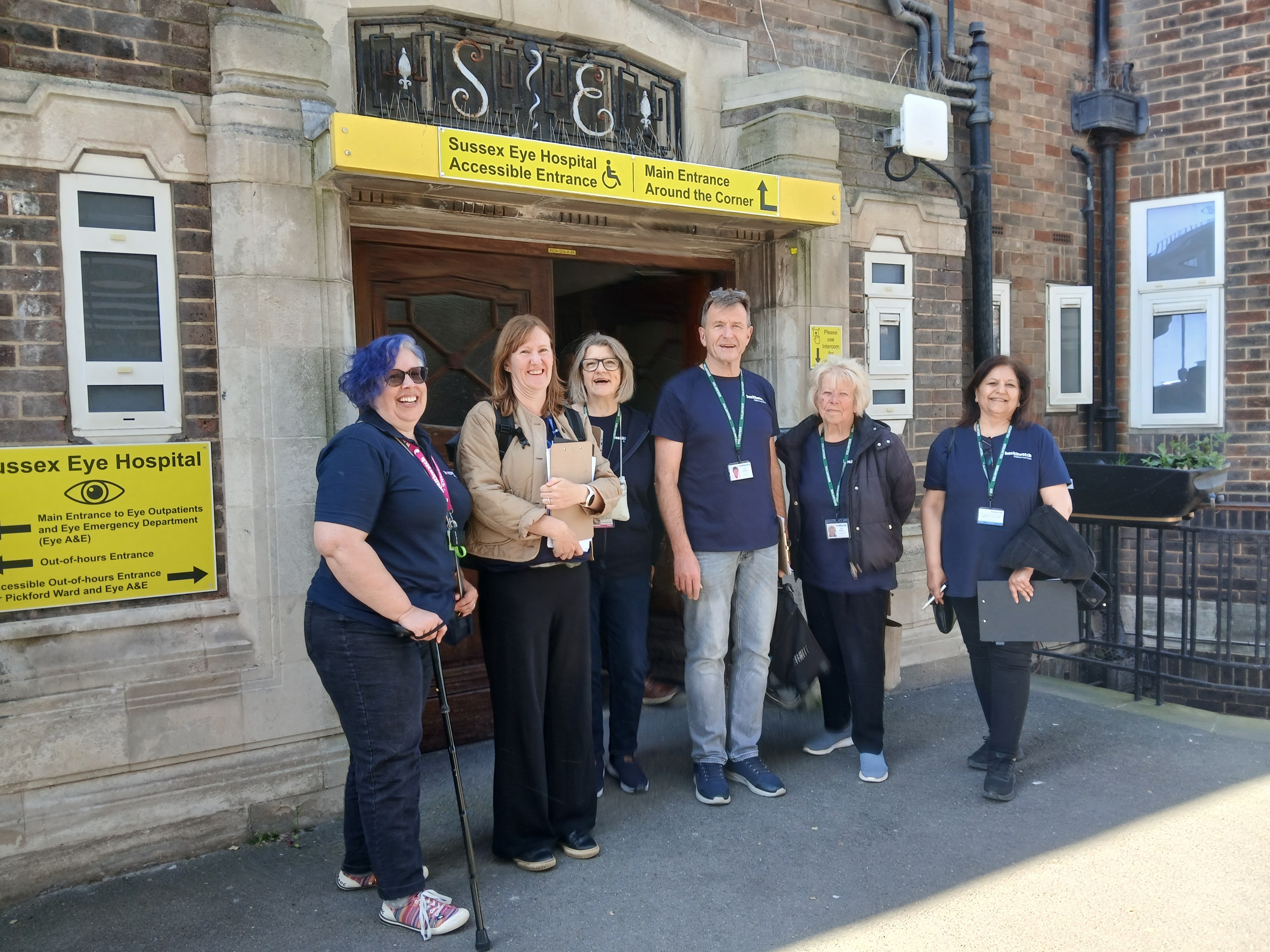
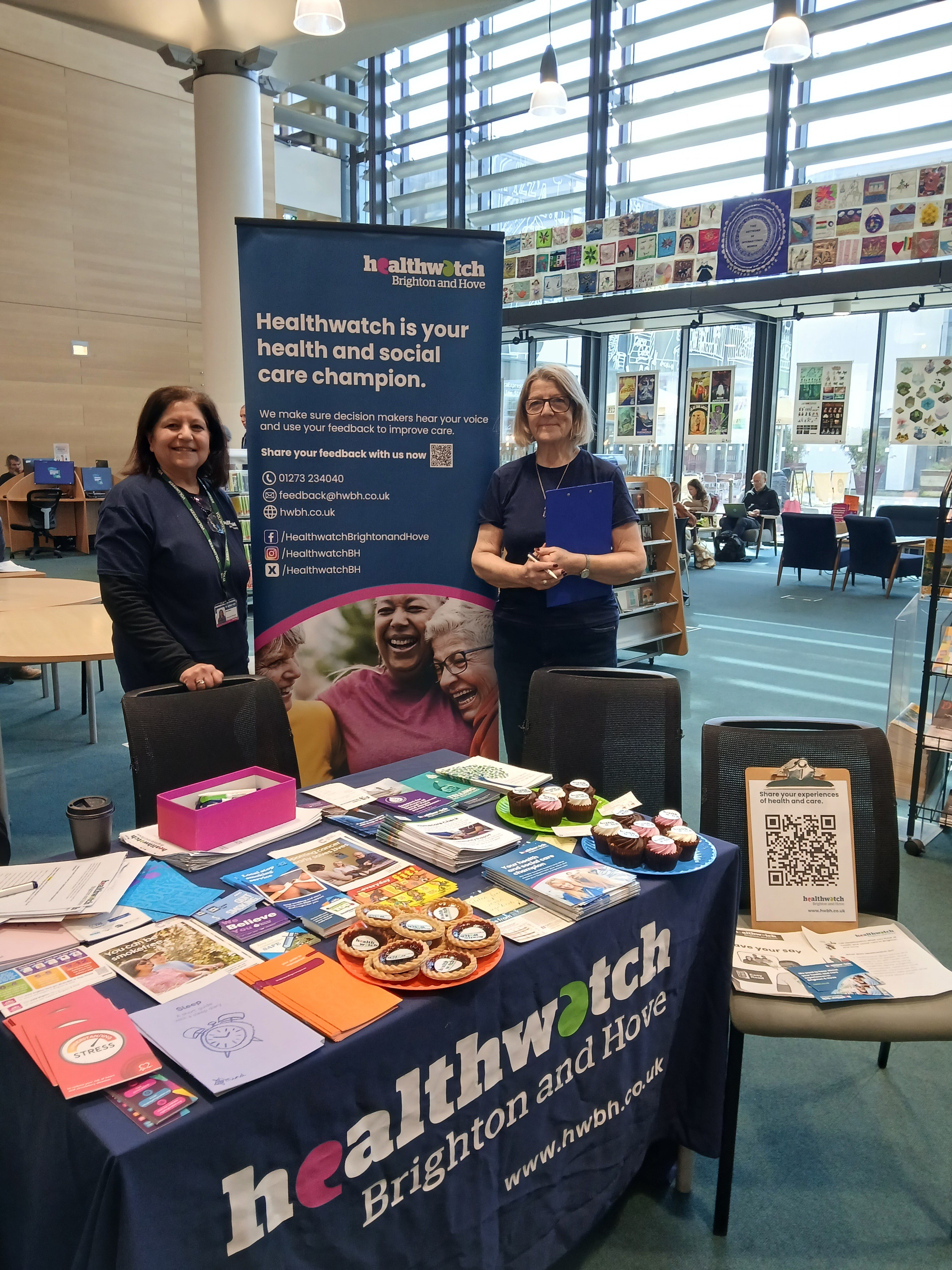
As part of this event, four Healthwatch Brighton and Hove volunteers – Sue, Bharti, Lynne and Conor - got together to chat about volunteering. They all regularly speak to local people about their experiences of health & care in their roles.
Some are involved in the Homecare Check project – visiting people in their homes to get feedback about their personal care plan. Others represent Healthwatch at meetings, like the Older People’s Council or Community Pharmacy Forum, and all have been involved in Enter & View visits of hospitals to observe and discuss the patient experience.
Read their conversation below.
Why did you want to volunteer?
Sue: I only got involved initially because a friend was involved with [what was] Local Involvement Networks [LINks] at the time, which then became Healthwatch. So, I got involved because she was doing it and enjoying what she was doing - just by a conversation.
Lynne: I retired in 2012, and I then decided that I wanted to volunteer, but I wasn't sure with what organisation and why. So, I volunteered for about half dozen organisations and then quickly realised that I'd taken on too much. And then by process of elimination, decided that one or two of the organisations that I volunteered for, I wasn't a good match for, or they weren't a good match for me. And I think anybody who's volunteering can learn what I learned - if you want to volunteer, it might take you some time to decide who you want to volunteer with and why, and not to be afraid to actually just test the water. Because there's nothing wrong in volunteering and then deciding that it's really just not for you.
So, when I retired in 2012, I did get involved with a number of organisations, but it came down to Healthwatch, and that might have been for one or two reasons: my dad was a community pharmacist, and I grew up living behind a chemist shop. So, my involvement with health was from a very early age. And to a certain extent, that's why I think my interest in Healthwatch has continued, and why I'm still a volunteer, because it most closely matches my interest and how I feel I can contribute.
Conor: I started volunteering some time ago, around 2000. Basically, volunteering gives many of us, including me, a sense of purpose outside of just ourselves. We all have to get through the day as ourselves and do things that are for ourselves, but if that's where everything stops, your life's a little bit insular so I think it's good to be doing something with and for other people - whether it's volunteering or something else. That was my initial motivation.
I think I was sort of saved by the bell; I did volunteer training at the Royal Sussex County Hospital (RSCH) and then just on the week that I was going to start, COVID started, and they basically shut down completely for volunteers. They said, ‘sorry, we'll be in touch whenever this is all over’. But then, halfway through, the Voluntary Services Manager got in touch with me and she said, ‘would you be interested in doing some work for Healthwatch?’ I said, ‘but who are they? What do they do?’ She explained the work they were doing on the Hospital Discharge project, so I said yes.
What interested you in volunteering?
Conor: It was all telephone work for the Hospital Discharge project, which was really interesting and sometimes quite traumatic work, where you're speaking to every single person who left the RSHC as an inpatient. They got a call from us to ask them how they're getting on, what kind of post-hospital discharge needs they had - whether it was food, psychological, etc. - and that really opened my mind up to the challenges and constraints of people from completely different backgrounds to myself, so I was learning about other people and able to help some of them. That was great.
Sue: It was great, because we could do something [during COVID]. I think I phoned about 140 people, and I was astounded by the fact that around 25 of that group, aged between 20 and 30, had tried to take their own life. That's a high number, what was going on out there? They were isolated and they really appreciated you calling. It was usually about a week after discharge that we were calling to check in on their well-being and how it was going for them. Some hadn't had any food parcels that they'd been promised, and some hadn't had any follow up.
Conor: When I say I think I was saved by the bell - volunteering in the RSHC and in many other hospitals is much more structured in that you do a shift in a certain ward, and that's it - you're fetching and carrying, you're doing some of the duties of a healthcare assistant and while that's nice and it brings you into contact with patients, I think there's so much more to volunteering.
As a Healthwatch volunteer, you’re talking to people on a slightly different level about their views, about what they'd like to see changed, and you’re also able to spot things. For example, if you go into someone's home when they’re receiving care, you’re actually able to report back on some of their concerns and can find out that something's been done about them. To me, this is a subjective view, but that's much more valuable. I'm glad that I ended up doing what I'm doing here.
How has volunteering helped you?
Lynne: It's flexible - I think that's really important. In 2020, I went through a bit of a bad phase. My sister died and it was terrible. I really wasn't operating - I wasn't operating at all – and what was good about Healthwatch was that I could say, at the moment, I'm just coping. Healthwatch were really supportive and said I could come back when I felt able to take something on, and that was really important to me. I didn't feel I was letting anybody down, but that I could return when I felt stronger. That flexibility was huge for me.
Sue: Adding to what Conor said, just recently, I requested a review for people I visited and considered needed a review of their care. I could put on the form that, in my opinion, this person needs a review by the council, and it actually happened. One of them still had my number and phoned me and said, thank you so much. This person was having five hours a week of care, and his main carer was his wife, who was totally blind.
Conor: Instances like this are real eye-openers, because you see some of the really bad circumstances people are living in, and in some ways, you're so admiring of them, because they manage to cope. I've come across a number of elderly couples looking after each other. One is not 100% there health-wise but looks after the other. And they need all the help that they can get, and they're grateful if they can report something to you that makes a change. Even small things, like some people are isolated, they are on their own and they're not aware that they could actually have a pop-in friend once a week through agencies like Together Co, Possability People, or the Aging Well initiative. It’s great if you can set something up for them.
Sue: Sometimes they’re in a bubble and don't go out at all, so how would they know what’s available? I refer people to the Carers Hub. You meet couples who are holding each other up, and not everybody has local family,
Bharti: I can understand that, because, we ended up looking after my mother-in-law, and we weren't prepared. There was a huge learning curve when she came and stayed with us. It was a very difficult period. We had to learn how to care for her, and it's such a time-consuming process; you get embroiled in just looking after this other person, and everything has to give.
That’s why organisations like the Carers Hub are so helpful, in the sense that they can signpost you to things or at least sow the seeds of where else you can get help, or what type of help you can get. And all those things are quite important.
That’s one of the reasons I want to volunteer in healthcare. I've been working in healthcare, improving services or implementing innovation to make things better, for a long time. I wanted to retire and build up a portfolio of other things to do, so as I was downshifting to retirement I thought, I want to start volunteering with organisations where you learn things and also stay connected with what you do. Healthwatch is perfect because, while I worked in a lot of operational improvement, patient voices were very few and far between. They said, ‘XYZ gave us some feedback, so we just changed this bit’. And you go, ‘no, but you haven't really got feedback’. With volunteering, you really see the flip side of how [patient feedback] is now helping improve the operational side, so I think that's been really, really helpful.
There are loads and loads of challenges that a person receiving care has and each individual is different, and you can never standardise surveys. Being able to get real feedback highlights the nitty gritty of what problems are.
What have you learnt through your volunteering?
Lynne: There is an awful lot of stuff that's available that people don't know about. But as a volunteer, you become known as a person who knows. People will ring me up and they'll say such and such has happened and I don't know anything about this, but I thought you might. As a volunteer, we've all mixed with other volunteers and a variety of different organisations, so you can say, ‘I don't know but I know a person who does’, and straight away you can redirect them.
It’s like, what have the Romans ever done for us? There is so much that's available for people, but the difficulty is getting that information to them. How much have I learned since I started volunteering about everything that's available? Stuff I never knew about, like facilities, opportunities etc. that I would never have learned about if I wasn’t a volunteer, and I love to share that.
Conor: That's why on the Homecare Check questionnaire, for me, the most important set of questions relate to ‘are you aware, or are you interested in, community services or social prescribing services?’ Or ‘do you know what social prescribing means?’ When you explain the services to them, some of them do say, ‘well, yes, actually, I would be interested’.
Sue: I'm a volunteer for Together Co as well, and I've recommended it to people. I explain what I do for the person that I visit, and it can be a phone call once a week, it can be a visit, whatever works for the pair of you. And they do try to match you with somebody they think you're going to get on with - I know a couple who play chess every week!
Bharti: I've also enjoyed finding out about this hidden network which contributes to the main network. There is lots in health and care which go under the radar. It’s little things, that people don't even think of, which are making things better. People don't recognise the amount of work that's put into it, which is mainly volunteer led. A lot of this hidden network is very volunteer led.
I also discovered more about health literacy. I’ve learned while volunteering to improve my communication; to speak more simply to talk to the everyday person, whereas before I was using a lot of jargon. As a volunteer, when you go and talk to people, they feel that you are listening to them. You're listening with a cause at the end of it, whereas if you are in the system, I know the person I'm talking to, I'm sure nothing will be done about anything.
Has there been any outstanding moments that you wish to share?
Bharti: I think Healthwatch has built a great reputation, so I'm proud to be part of it. At [a recent Healthwatch event], I spoke to a lady who specifically came to speak to us because she felt passionate. She's wheelchair-bound most of the time. She can't even stand up to have a shower, and yet, she managed to make this effort to come especially to speak to us, because she wanted her voice heard about NHS 111 services not working.
We always talk about inequalities and how services are not equally accessible to people who have disabilities – she really highlighted this point. She has basic support but doesn’t have someone to come in and look at her specific needs - she lives alone. She'd come down with some infection during one of the bank holidays and it took more than 24 hours for the 111 service to come back to her. And even then, she had to make the effort to go and get this recommended prescription from the pharmacy by herself.
So, the point she was really trying to highlight was that for people like herself in similar situations, why can't there be a specific emergency service where you don't have to phone 111, or could be transported by some kind of patient transport which isn't an ambulance? You could really feel the things that she'd been through, you know, so that was the outstanding moment. I just admired the fact that she made all this effort, despite the fact that she's disabled, to come to talk to us.
What do you enjoy about volunteering?
Conor: I think there are many reasons for volunteering but there is a personal motivation. I mentioned, for example, that if you're doing everything for yourself, and not anything outside of your immediate little circle of family or friends, you're kind of in this little cocoon, whereas if you're engaging with people from different backgrounds, you're learning more etc.
But also, from a social point of view, there are many social benefits of being a volunteer. First of all, you meet fellow volunteers, and you become friends with some of them and good acquaintances with others, which is great. That certainly applies to me. If you're making friends through volunteering, then if you need help, a volunteer can be your friend and help you.
Lynne: I meet up with [a past Healthwatch volunteer] every couple of months for a coffee. We enjoy talking about the same things, and he has become a dear friend.
Conor: Also, if you're in a social situation, like a party or some kind of event where there's people that you don't really know, the classic question is, ‘what do you do? Are you still working? Are you retired, and how do you spend your time?’ It's almost like an accusation! ‘Are you actually doing anything?’ But then you say, well actually, I do volunteer. And if they’ve never heard of Healthwatch, you tell them. A lot of them are interested so there's a double benefit there, because you're promoting Healthwatch and showing yourself as a worthwhile human being that's actually doing something.
Lynne: And it does stop brain atrophy, because it does keep you thinking. It does keep you talking. Like you said, Bharti, you learn how to talk or to express yourself differently, depending on who you're talking to - to simplify things.
We were talking about learning as an older person. You get to a certain age, and your language is different to that of a younger person. You don't use the same terminology, and you really don't want to cause any kind of offence at all. I don't have a prejudiced bone in my body, but I'm sure I don't always use the right language because it's not my language, it's not a language I learned when I was growing up. But I want to learn how to fit into a society that's acceptable now, and how to do the right thing. I think volunteering with Healthwatch helps me to do that because in a way, it's re-educating me. I hope so, anyway!
Sue: We do have the opportunity to meet up quite often as a social group - with a glass of wine or whatever you prefer, with food, and it’s lovely. And because sometimes people have dipped in or dipped out, it’s a good opportunity to meet up.
If someone was thinking about being a volunteer but wasn’t sure, what would you say to them?
Lynne: If someone was thinking about being a volunteer but wasn't sure, I go back to what I said initially: don't be afraid to dip your toe in the water. And if you do volunteer with an organisation and you decide it's not for you, don't decide that volunteering is not for you, just that volunteering with that organisation is not right for you. Because it's a little bit like a dating agency. You just need to find the organisation that you want to be involved with. Find a good match.
Thank you so much for taking the time to chat, Sue, Bharti, Lynne and Conor.
You can find out more about Volunteers' Week and ways to get involved on their website.